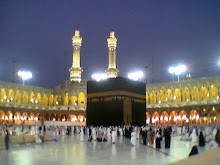
Prophet Mohammed PBUH is now 43 years old and is known for his extreme honesty and trustworthiness.
Quraysh decided that whenever anyone would spot Muhammad they would say "mad man" aloud and run away. Such rumor spread to the extent that travelers coming from Yemen far away were warned to beware of the crazy Quraysh "lad". Do you feel like you want to stand up and defend him? You can follow his Sunnah (tradition) and do some good in this world without violence and just by working hard.
Om-Jameel, Abu-Lahab's wife used to gather garbage and thorns and put them on the doorstep of the prophet's house. She was relentless. She kept on provoking Quraysh and instigating disruptions.
Allah mentioned her in the Holy Quran "And his wife, the constant bearer of firewood, Upon her (long) neck she will have a rope of palm-fibers." (TMQ, 111:4-5).
She did not actually carry firewood, but the Quran uses this metaphor as if she was lighting the fire of disruption in Quraysh. She heard about Quran verses talking about her and went to the prophet PBUH to throw him with stones. However, Allah (SWT) allowed such suffering but only to a limit. He blinded Om-Jameel from seeing the Prophet PBUH when she asked Abu-Bakr about him though he was just in front of her. She ridiculed his name in a made-up poem about how they were going to defy his religion.
Quraysh disbelievers liked Om-Jameel's poem and sang it and spread it allover Makkah. The companions flamed with anger but the Prophet PBUH calmed them down. They knew him for a patient man so they got afraid and stopped what they did. Allah (SWT) says what can be translated as, " Surely the ones who are (guilty of) crimes used to laugh at the ones who believed, And when they passed by them (they used) to wink one to another. And when they turned over (to their families), they turned over jesting, And when they saw them, they said, “Surely these (people) are indeed erring.” And in no way were they sent preservers over them. So Today the ones who believed are laughing at the steadfast disbelievers, On couches, looking (down upon them). Have the steadfast disbelievers been requited for what they were performing? "(TMQ, 83:29-36).
This came as a strong support to raise the spirits of the prophet PBUH and his companions. "And indeed We already know that, for you, your breast straitens by what they say. So extol with the praise of your Lord and be of the prostrating. "(TMQ, 15:97-98). In another ayah, Allah (SWT) says what can be translated as, "In no way is anything said to you except what already was said to the Messengers before you.
Surely your Lord is indeed The Owner of forgiveness and The Owner of painful punishment..."(TMQ, 41: 43). Companions and believers increased in number. "You have been the most charitable nation brought out to mankind: you command beneficence, and forbid maleficence, and believe in Allah ..."(TMQ, 3: 110).
Quraysh even tried to hurt his family. Al-'Asi Ibn-Wael, the father of Amr Ibnul-Aas spread a saying that Mohammed PBUH was incapable of having boys, a shameful matter back then, his two boys being dead. Thus, they can get rid of him after his death as he has no one to carry his legacy. This hurt Khadijah. She was 55 years old and too old to bear more children.
To relieve them from their pains Allah (SWT) revealed these ayahs which could be translated as, "Surely We have given you the Abundance; So pray to your Lord and slaughter (the sacrifice). Surely your antagonist is he who is without offspring (Literally: curtailed). "(TMQ, 108: 1-3).
Also, "Have We not expanded your breast for you, And laid aside from you your encumbrance. Which weighed down your back, And did We not raise for you your remembrance? So surely with difficulty comes ease, Surely with difficulty comes ease. So when you are at leisure, (i.e., not o) then labor, And to your Lord then be desirous (i.e., of His Grace)."(TMQ, 94: 1-8).
After the companions exceeded 200 in number Quraysh tried to hurt the prophet's family even more. Abu-Lahab divorced his two sons from the prophet's two daughters. One of the girls later on married Othman Ibn-Affan, one of the prophet's companion and the other one, Om-Kulthoum, didn't get married until she went to Madinah as all the companions were younger than her. Khadijah (RA) however, did not mind this as most mothers are expected to do. She supported her husband even more.
The persistence of Mohammed PBUH bothered Abu-Jahl to the extent that he asked him
to leave him alone as he will not listen to him anyway. " We already know that surely it indeed grieves you (the things) they say. Yet surely they do not cry lies to you, but the unjust (people) repudiate the signs of Allah. "(TMQ, 6:33).
A friend of Abu-Jahl accused Mohammed in front of him that he is a liar, but away from him he later said that he knew that Mohammed was saying the truth but he was only doing this because his family used to be competitors to Abdul-Muttalib’s family. He was driven by greed and selfishness.
As to physical hurt, Okba Ibn-Abu-Ma'eet took off his gown, wrapped it in a rope-like shape and put it around the neck of our beloved prophet PBUH while praying in front of the Ka3ba until he fell from suffocation. Not only this, Okba further went and slaughtered a camel, took out its guts and put it on the prophet's back while he was prostrating in prayer. The prophet remained still until his daughter came. She cleaned him while crying from the sight itself but her father told her not to cry, as Allah (SWT) shall support her father.
In heaven, the prophet shall hold his hand for you to drink from, but the angels will come and take the weak believers away.
Another disbeliever hid in the desert of Makkah and filled his handful with sand and threw it in our beloved's face. He went home with his clothes full of sand and dust and his little girl Fatima (RA) saw this and tried to rub the dust away crying. He soothed her and told her not to cry because Allah (SWT) shall support him.
Allah (SWT) says what can be translated as, "And in no way is Muhammad (anything) except a Messenger; the Messengers have already passed away before him. Then, will it be that, in case he dies or is killed, will you turn (Literally: turn (s) over on) on your heels? ..."(TMQ, 3:144).
Do you know why Okba Ibn-Abu-Ma'eet defied prophet Muhammad PBUH? He was a close friend to Abu-Jahl and started to listen to Muhammad PBUH and to believe in what he was saying. He was about to embrace Islam. At that time, Abu-Jahl was away on a trip and when he returned back, he threatened Okba that he shall not look at him nor talk to him again until he would go to spit on the prophet’s PBUH face. Okba chose his friend and spitted on the face of our beloved PBUH.
" And the Day that the unjust (person) will bite at both his hands, (and) say, “Oh, would that I had taken to myself a way along with the Messenger. Oh, woe to me! Would that I had not taken so-and-so to myself for a (close) fellow. Indeed he readily made me err away from the Remembrance after it had come to me.”" (TMQ, 25:27-29).
The Prophet was not only supportive of Islam, but of all forms of justice. Once a man came to Makkah claiming that Abu-Jahl owed him money. To have a good laugh, some disbelievers advised him to go to MOhammEd and ask for his help. Despite the conflict with Abu-Jahl, the Prophet took the man to Abu-Jahl and told Abu-Jahl to pay the due money. In effect, Abu-Jahl paid the due money.
Source:
http://www.AmrKhaled.net
Sunday, June 29, 2008
Wednesday, June 11, 2008
Protection from Bani Hashim
In the next phase, he got the protection of Bani Hashim tribe with the consent of his uncle Abu-Taleb and proceeded with the missionary activity to spread Islam publicly from on top of Al Safa Mountain. He moved on smoothly from one phase to another. His companions never questioned his plans. Our Prophet PBUH always took the initiative and waited for Quraysh's reaction. He was aware that Quraysh would strongly challenge him. He planned everything without waiting for supernatural miracles. Jebreel AS only provided Mohammed with methodology and support. Great miracles were still to come.
Quraysh moved in steps. First, they tried to distort the prophet's da3wa. Next came ridicule and humiliation to shake his spirit followed with moral harm, hurting his family members and causing physical harm for him and the companions. They even tried to kill them and actually killed some of them. All of this was for the sake of Muslims and Islam.
Source:
http://www.AmrKhaled.net
Quraysh moved in steps. First, they tried to distort the prophet's da3wa. Next came ridicule and humiliation to shake his spirit followed with moral harm, hurting his family members and causing physical harm for him and the companions. They even tried to kill them and actually killed some of them. All of this was for the sake of Muslims and Islam.
Source:
http://www.AmrKhaled.net


Tuesday, June 3, 2008
First 4 years of Islam
In the begining Prophet Mohammed PBUH was on his own, no supporters, no money, no followers. However, he had a deep belief in his message, high principles, and twenty years of preparation.
The first followers were Khadijah (AS), Abu Baker (AS) and Ali bin Abu Taleb (AS). Over a period of six months, the number of followers increased to 45, most of them were young men whose ages did not exceed 30 years. They were 27 men, and 18 women. They consisted of 34 wealthy and eleven poor companions. Unlike what is usually said, most of the first followers were rich not poor.
These companions were from 16 different tribes. This was part of the Prophet's plan in order to be integrated in society. There was a Muslim in every household now. These companions were of different social backgrounds: Ammar Ibn-Yasser and Belal Ibn-Rabah, the slaves, Othman Ibn-Ma'zoum, the great wealthy lord.
In the Prophet's household, everyone embraced Islam. The household consisted of ten members: the Prophet (PBUH), Khadijah (AS), the four daughters: Zainab, Ruqaya, Um-Kolthoum, and Fatima, in addition to two maids, and two young men: Ali bin Abu Talib and Zaid Ibn-Haritha.
After three years, the number of Muslims had increased by more than a hundred. Quraysh did not notice this rise, which meant that the Prophet's plan had succeeded. Three years had passed without confrontation or conflict, and now a few of the elite were on our side, and Islam was inside every house in Mekkah. Three years had passed and marked the end of the first phase.
Two verses descended on the Prophet that told him its time to announce Islam Publicly:
First, "So profess openly what you have been commanded and veer away from the associators (Those who associate others with Allah)" (TMQ, 15:94), warning him of opposition and harm.
The second verse states that it is no more the phase of selection: "And warn your kinsmen, the nearest kin," (TMQ, 26:214). The Inspiration did not tell the Prophet where to start, but he was only ordered to make the matter public, and was left to plan for this action.
Now the Prophet PBUH had to take the next step; he had to announce Islam to the people. Now was the time for the idea to reach everyone & everywhere.
The Prophet's attitude reflected the flexibility of his mind and his wise planning, for he always took the initiative while Quraysh reacted to his actions. They were never able to force him to follow a certain course of action despite their power.
The Prophet PBUH chose to start with his own family, not with the whole of Quraysh. He invited all his family, men and women, to a feast. He let them eat first, then as soon as he started to speak, he was interrupted by Abu-Lahab who spoke ill of Mohammed's message, and warned them of the grave consequences that would befall them if Mohammed were not stopped. The Prophet PBUH did not lose his composure or temper; he did not even put his case forward on that occasion.
The Prophet did not want to start his call for Islam with an argument with his uncle, and decided to give it another try. Abu-Jahl's response was not out of hatred to the Prophet, on the contrary, the Prophet was dear to him ever since he was born to the extent that his two boys (Otba and Otayba) were engaged to the Prophet's two daughters (Ruqaya and Um-Kolthoum). However, Abu-Jahl was worried about his business, he knew that this message will turn Quraysh against them. The new religion called for removing the idols from the Ka3ba, which meant that the other tribes whose idols will fall would seek revenge by attacking their commercial caravans. Therefore, he chose to show everyone that he was against Mohammed to avoid any problems.
Once again, the Prophet PBUH invited his family for a second feast, but this time he decided to talk to them while they were still eating. He did not exclude Abu-Lahab from the invitation, to avoid more hostility. The Prophet PBUH started to talk confidently telling them about Islam and how he was the Prophet PBUH,
“O sons of Hashem, rescue yourselves from the Fire; O sons of Abd al-Muttalib, rescue yourselves from the Fire; O Fatima, rescue thyself from the Fire, for I have no power (to protect you) from Allah in anything except this that I would sustain relationship with you."[4]
Abu-Lahab, far from changing his attitude, continued his opposition to the Prophet, while Abu-Taleb, his other uncle who kept his promise to his late father of taking care of Muhammad, pledged to help and protect him as long as he lived.
The Prophet achieved his target from the feast: he wanted to gain the support and protection of his family. This does not undermine his trust in Allah. Islam teaches us to rely on Allah’s protection at all times, but also to take all the necessary measures and precautions. The Prophet still wanted another thing from them: he wanted them to believe in his message. Hamza and Al-Abbas turned their faces away; Abu-Taleb was reluctant to leave his father's beliefs although deep inside he felt Mohammed’s honesty. The rest of the family sat in silence. No one followed him, except for one young kid, Ali who was also invited, and answered the Prophet's call and gave him his hand to pledge loyalty. Why do we not do the same, why do we not gather our families to agree upon doing some rightful deeds together? Let us learn from our Prophet.
The time had come to announce Islam to everyone. The Prophet PBUH chose a famous spot in Mekkah (the mountain of Safa) climbed it, and started, boldly, to call people to gather. Let the Prophet's strength be an inspiration to you never to be ashamed of your religion, always be strong and daring. Remember the ayah that can be translated as: "A Book sent down to you, (i.e., The Prophet) so let there be no restriction in your breast on account of it, that you may warn thereby; and (it is) a Reminding for the believers." (TMQ, 7:2).
The Prophet started calling, "O Bani Fihr! O Bani 'Adi!" addressing various tribes of Quraysh till they were assembled. Those who could not come themselves sent their messengers to see what was happening. Abu Lahab and other people from Quraysh came and the Prophet then said, "Suppose I told you that there was an (enemy) cavalry in the valley intending to attack you, would you believe me?" They said, "Yes, for we have never known you to tell anything other than the truth." He then said, "I am Allah's Prophet to you, I am a warner to you in face of a terrific punishment."
Abu Lahab said (to the Prophet) "May your hands perish all this day. Is it for this purpose that you have gathered us?" [5] Then the Qur'an was revealed: "Would the hands of Abu Lahab be cut up, (i.e., perish) and would he be cut up (too)! In no way did his wealth avail him, neither whatever he earned" (TMQ, 111: 1-2).
Betrayal is most painful when it comes from someone dear. Abu-Lahab was the only one whose name came in such a manner in Quran because he was the first one to provoke others to defy the Prophet. The Prophet PBUH was a virtuous man, did not even answer him. Do not ever set a bad example to your friends, do not be the first to introduce a sin, for the Prophet said, "He who sets in Islam an evil precedent, there is upon him the burden of that, and the burden of him also who acted upon it subsequently, without any deduction from their burden." [6]
Then the Prophet descended the mountain and started preaching for Islam. He talked to people about salvation and attracted them to religion. He did not start with warnings of hellfire, but with promises of Jannah. He wanted religion to appeal to them. Therefore, he did not push them away with words about torment and pain. He said, "oh people, say there is no deity but Allah and you will prosper."[7]
After this incident Quraysh stopped being neutral towards Mohammed PBUH.
Despite the fact that Quraysh started using violence against him and his followers, the Prophet unlike them, never leaned towards violence, because one could never fight or kill one’s own people.
Although the followers were only about 200, while Mekkah’s population was around 25,000 to 30,000, those followers were able to shake Quraysh's resolve because they were deeply rooted in the society. Quraysh tried to stop him in many ways. They started spreading doubts about the Prophet (SAWS), mocking and ridiculing what he said, trying to cause psychological and physical harm, until they even attempted to kill him.
They started calling him several names from poet, sorcerer to insane. Al-Walid Ibn Al Mu'3eera knew that Mohammed was truthful, but he was too arrogant to admit it. Then Allah sent some verses that describe how Al-Walid was scheming. Allah says what can be translated as, "Leave Me with him whom I created alone, And set up (Literally: made) for him extensive wealth, And sons always in presence, And made (life) smooth for him in an accessible (way). Thereafter he expects that I increase (My favors). Not at all! Surely he has been stubborn to Our signs. I will soon oppress him to a (hard) mounting (in calamities). Surely he did think and he determined! So, may he be slain, how he determined! Again, (Literally: Thereafter) may he be slain, how he determined! Thereafter he looked (round); Thereafter he frowned, and he scowled; Thereafter he withdrew, and he waxed proud. So he said, “Decidedly this is nothing except sorcery, transmitted relics. Decidedly this is nothing except the speech of mortals. I shall soon roast him in Saqar." (TMQ, 74:11-26).
As the Prophet went on speaking to people about Islam, he was being followed by his uncle Abu-Lahab who told people that his nephew Mohammed was insane and incited them not believe him. They even sent one of them, Al-Nadr Ibnul-Harith, to Persia for a year to learn tales and fables like the ones Muhammad narrated. They went to the extent of claiming that the Prophet was a secret agent! They also said that he had someone dictating him these myths, "And the ones who have disbelieved have said, “Decidedly this is nothing except a falsehood he has fabricated, and other people have helped him to it.” So they have already come with injustice and forgery (i.e., they have committed injustice and forgery) And they have said, “Myths of the earliest (people) that he has had written down so that they are dictated to him before sunrise and at nightfall" (TMQ, 25:4-5).
However, nothing could stop the Prophet (SAWS) who dedicated all his time and efforts to his message, to the point that Allah pitied his Prophet, as He says what can be translated as: "Yet, it may be that you will consume yourself of sorrow over their tracks (i.e., their tracks or footprints when they turn away) in case they do not believe in this discourse. " (TMQ, 18:6).
In spite of their attempts to shake the trust in him, the number of believers was in constant increase, because truth always prevails.
Source:
http://www.AmrKhaled.net
The first followers were Khadijah (AS), Abu Baker (AS) and Ali bin Abu Taleb (AS). Over a period of six months, the number of followers increased to 45, most of them were young men whose ages did not exceed 30 years. They were 27 men, and 18 women. They consisted of 34 wealthy and eleven poor companions. Unlike what is usually said, most of the first followers were rich not poor.
These companions were from 16 different tribes. This was part of the Prophet's plan in order to be integrated in society. There was a Muslim in every household now. These companions were of different social backgrounds: Ammar Ibn-Yasser and Belal Ibn-Rabah, the slaves, Othman Ibn-Ma'zoum, the great wealthy lord.
In the Prophet's household, everyone embraced Islam. The household consisted of ten members: the Prophet (PBUH), Khadijah (AS), the four daughters: Zainab, Ruqaya, Um-Kolthoum, and Fatima, in addition to two maids, and two young men: Ali bin Abu Talib and Zaid Ibn-Haritha.
After three years, the number of Muslims had increased by more than a hundred. Quraysh did not notice this rise, which meant that the Prophet's plan had succeeded. Three years had passed without confrontation or conflict, and now a few of the elite were on our side, and Islam was inside every house in Mekkah. Three years had passed and marked the end of the first phase.
Two verses descended on the Prophet that told him its time to announce Islam Publicly:
First, "So profess openly what you have been commanded and veer away from the associators (Those who associate others with Allah)" (TMQ, 15:94), warning him of opposition and harm.
The second verse states that it is no more the phase of selection: "And warn your kinsmen, the nearest kin," (TMQ, 26:214). The Inspiration did not tell the Prophet where to start, but he was only ordered to make the matter public, and was left to plan for this action.
Now the Prophet PBUH had to take the next step; he had to announce Islam to the people. Now was the time for the idea to reach everyone & everywhere.
The Prophet's attitude reflected the flexibility of his mind and his wise planning, for he always took the initiative while Quraysh reacted to his actions. They were never able to force him to follow a certain course of action despite their power.
The Prophet PBUH chose to start with his own family, not with the whole of Quraysh. He invited all his family, men and women, to a feast. He let them eat first, then as soon as he started to speak, he was interrupted by Abu-Lahab who spoke ill of Mohammed's message, and warned them of the grave consequences that would befall them if Mohammed were not stopped. The Prophet PBUH did not lose his composure or temper; he did not even put his case forward on that occasion.
The Prophet did not want to start his call for Islam with an argument with his uncle, and decided to give it another try. Abu-Jahl's response was not out of hatred to the Prophet, on the contrary, the Prophet was dear to him ever since he was born to the extent that his two boys (Otba and Otayba) were engaged to the Prophet's two daughters (Ruqaya and Um-Kolthoum). However, Abu-Jahl was worried about his business, he knew that this message will turn Quraysh against them. The new religion called for removing the idols from the Ka3ba, which meant that the other tribes whose idols will fall would seek revenge by attacking their commercial caravans. Therefore, he chose to show everyone that he was against Mohammed to avoid any problems.
Once again, the Prophet PBUH invited his family for a second feast, but this time he decided to talk to them while they were still eating. He did not exclude Abu-Lahab from the invitation, to avoid more hostility. The Prophet PBUH started to talk confidently telling them about Islam and how he was the Prophet PBUH,
“O sons of Hashem, rescue yourselves from the Fire; O sons of Abd al-Muttalib, rescue yourselves from the Fire; O Fatima, rescue thyself from the Fire, for I have no power (to protect you) from Allah in anything except this that I would sustain relationship with you."[4]
Abu-Lahab, far from changing his attitude, continued his opposition to the Prophet, while Abu-Taleb, his other uncle who kept his promise to his late father of taking care of Muhammad, pledged to help and protect him as long as he lived.
The Prophet achieved his target from the feast: he wanted to gain the support and protection of his family. This does not undermine his trust in Allah. Islam teaches us to rely on Allah’s protection at all times, but also to take all the necessary measures and precautions. The Prophet still wanted another thing from them: he wanted them to believe in his message. Hamza and Al-Abbas turned their faces away; Abu-Taleb was reluctant to leave his father's beliefs although deep inside he felt Mohammed’s honesty. The rest of the family sat in silence. No one followed him, except for one young kid, Ali who was also invited, and answered the Prophet's call and gave him his hand to pledge loyalty. Why do we not do the same, why do we not gather our families to agree upon doing some rightful deeds together? Let us learn from our Prophet.
The time had come to announce Islam to everyone. The Prophet PBUH chose a famous spot in Mekkah (the mountain of Safa) climbed it, and started, boldly, to call people to gather. Let the Prophet's strength be an inspiration to you never to be ashamed of your religion, always be strong and daring. Remember the ayah that can be translated as: "A Book sent down to you, (i.e., The Prophet) so let there be no restriction in your breast on account of it, that you may warn thereby; and (it is) a Reminding for the believers." (TMQ, 7:2).
The Prophet started calling, "O Bani Fihr! O Bani 'Adi!" addressing various tribes of Quraysh till they were assembled. Those who could not come themselves sent their messengers to see what was happening. Abu Lahab and other people from Quraysh came and the Prophet then said, "Suppose I told you that there was an (enemy) cavalry in the valley intending to attack you, would you believe me?" They said, "Yes, for we have never known you to tell anything other than the truth." He then said, "I am Allah's Prophet to you, I am a warner to you in face of a terrific punishment."
Abu Lahab said (to the Prophet) "May your hands perish all this day. Is it for this purpose that you have gathered us?" [5] Then the Qur'an was revealed: "Would the hands of Abu Lahab be cut up, (i.e., perish) and would he be cut up (too)! In no way did his wealth avail him, neither whatever he earned" (TMQ, 111: 1-2).
Betrayal is most painful when it comes from someone dear. Abu-Lahab was the only one whose name came in such a manner in Quran because he was the first one to provoke others to defy the Prophet. The Prophet PBUH was a virtuous man, did not even answer him. Do not ever set a bad example to your friends, do not be the first to introduce a sin, for the Prophet said, "He who sets in Islam an evil precedent, there is upon him the burden of that, and the burden of him also who acted upon it subsequently, without any deduction from their burden." [6]
Then the Prophet descended the mountain and started preaching for Islam. He talked to people about salvation and attracted them to religion. He did not start with warnings of hellfire, but with promises of Jannah. He wanted religion to appeal to them. Therefore, he did not push them away with words about torment and pain. He said, "oh people, say there is no deity but Allah and you will prosper."[7]
After this incident Quraysh stopped being neutral towards Mohammed PBUH.
Despite the fact that Quraysh started using violence against him and his followers, the Prophet unlike them, never leaned towards violence, because one could never fight or kill one’s own people.
Although the followers were only about 200, while Mekkah’s population was around 25,000 to 30,000, those followers were able to shake Quraysh's resolve because they were deeply rooted in the society. Quraysh tried to stop him in many ways. They started spreading doubts about the Prophet (SAWS), mocking and ridiculing what he said, trying to cause psychological and physical harm, until they even attempted to kill him.
They started calling him several names from poet, sorcerer to insane. Al-Walid Ibn Al Mu'3eera knew that Mohammed was truthful, but he was too arrogant to admit it. Then Allah sent some verses that describe how Al-Walid was scheming. Allah says what can be translated as, "Leave Me with him whom I created alone, And set up (Literally: made) for him extensive wealth, And sons always in presence, And made (life) smooth for him in an accessible (way). Thereafter he expects that I increase (My favors). Not at all! Surely he has been stubborn to Our signs. I will soon oppress him to a (hard) mounting (in calamities). Surely he did think and he determined! So, may he be slain, how he determined! Again, (Literally: Thereafter) may he be slain, how he determined! Thereafter he looked (round); Thereafter he frowned, and he scowled; Thereafter he withdrew, and he waxed proud. So he said, “Decidedly this is nothing except sorcery, transmitted relics. Decidedly this is nothing except the speech of mortals. I shall soon roast him in Saqar." (TMQ, 74:11-26).
As the Prophet went on speaking to people about Islam, he was being followed by his uncle Abu-Lahab who told people that his nephew Mohammed was insane and incited them not believe him. They even sent one of them, Al-Nadr Ibnul-Harith, to Persia for a year to learn tales and fables like the ones Muhammad narrated. They went to the extent of claiming that the Prophet was a secret agent! They also said that he had someone dictating him these myths, "And the ones who have disbelieved have said, “Decidedly this is nothing except a falsehood he has fabricated, and other people have helped him to it.” So they have already come with injustice and forgery (i.e., they have committed injustice and forgery) And they have said, “Myths of the earliest (people) that he has had written down so that they are dictated to him before sunrise and at nightfall" (TMQ, 25:4-5).
However, nothing could stop the Prophet (SAWS) who dedicated all his time and efforts to his message, to the point that Allah pitied his Prophet, as He says what can be translated as: "Yet, it may be that you will consume yourself of sorrow over their tracks (i.e., their tracks or footprints when they turn away) in case they do not believe in this discourse. " (TMQ, 18:6).
In spite of their attempts to shake the trust in him, the number of believers was in constant increase, because truth always prevails.
Source:
http://www.AmrKhaled.net
Monday, May 26, 2008
Start of The Da3wa
How did the Prophet start the da3wa (introduce people to Islam)?
He did not start with knocking down the idols around the Ka3ba. These, he knew, were going to be knocked down eventually after establishing Islam.
He did not start by declaring the message off a mountain. No one would have listened.
His plan was to choose among every family in Quraysh those who were successful in their practical life (committed people but not necessarily rich or descendants of great families) and known for their moral conduct.
His plan was to form a nucleus of distinguished people who would be committed to the message and who would support him.
One of these people was Abu-Bakr, a 38 years-old successful trader, who was cherished by Quraysh and was an expert in the genealogies of the Arabs of the Arabian Peninsula.
Another person was Khadijah, not because she was his wife, but because she was distinguished.
The third person was Ali Ibn Abu-Taleb, the Prophet’s first cousin who was 10 years-old. He was living in Mohammed’s house at that time and asked the Prophet about this religion when he saw him praying, then asked for a chance to think it over before he embraced Islam. Even better, the following day, when the Prophet asked him what his decision was, Ali answered, “Repeat what you said yesterday.” Having thought it over, he embraced Islam and uttered Al-Shahada (declaration of faith).
Two days later, Abu-Taleb (the Prophet’s uncle) saw Ali praying and asked him about it. Ali answered, “I followed Mohammed and committed myself to the true way. This is the true way.” Abu-Taleb said, “Stay as you are. Mohammed would never command you except with what is right.”
Islam started with Mohammed, one man, one woman, and a child. Four people were the nucleus of all this success.
Source:
http://www.AmrKhaled.net
He did not start with knocking down the idols around the Ka3ba. These, he knew, were going to be knocked down eventually after establishing Islam.
He did not start by declaring the message off a mountain. No one would have listened.
His plan was to choose among every family in Quraysh those who were successful in their practical life (committed people but not necessarily rich or descendants of great families) and known for their moral conduct.
His plan was to form a nucleus of distinguished people who would be committed to the message and who would support him.
One of these people was Abu-Bakr, a 38 years-old successful trader, who was cherished by Quraysh and was an expert in the genealogies of the Arabs of the Arabian Peninsula.
Another person was Khadijah, not because she was his wife, but because she was distinguished.
The third person was Ali Ibn Abu-Taleb, the Prophet’s first cousin who was 10 years-old. He was living in Mohammed’s house at that time and asked the Prophet about this religion when he saw him praying, then asked for a chance to think it over before he embraced Islam. Even better, the following day, when the Prophet asked him what his decision was, Ali answered, “Repeat what you said yesterday.” Having thought it over, he embraced Islam and uttered Al-Shahada (declaration of faith).
Two days later, Abu-Taleb (the Prophet’s uncle) saw Ali praying and asked him about it. Ali answered, “I followed Mohammed and committed myself to the true way. This is the true way.” Abu-Taleb said, “Stay as you are. Mohammed would never command you except with what is right.”
Islam started with Mohammed, one man, one woman, and a child. Four people were the nucleus of all this success.
Source:
http://www.AmrKhaled.net
3 First Verses of the Holy Quran
The first three verses which were revealed to the Prophet after “Recite,” are:
- Surat Al-Muzzammil (Enwrapped): “O you enwrapped (in your raiment). Rise up (to pray during) the night, except a little, A half of it, or diminish a little thereof, Or increase thereto; and recite the Qur’an (in a distinct) recitation....” (TMQ, 73:1-4).
click to listen to Surat Al-Muzzammil:
- Surat Al-Muddaththir (shrouded): “O you shrouded (in your mantle), O you shrouded (in your mantle), And so your Lord magnify, And so your clothes purify, And so defilement forsake! And be not bountiful, (hoping) to gain more, And to your Lord (endure) patiently!..." (TMQ, 74:1-7).
click to listen to Surat Al-Muddaththir:
- Surat Al-Fatihah (The Opening): “In The Name of Allah, The All-Merciful, The Ever-Merciful. Praise be to Allah, The Lord of the worlds. The All-Merciful, The Ever-Merciful. The Possessor of the Day of Doom. You only do we worship, and You only do we beseech for help. Guide us in the straight Path. The Path of the ones whom You have favored, other than that of the ones against whom You are angered, and not (that of) the erring... (It is customary to say “amîn” “amen” at the end of this Surah).” (TMQ, 1:1-7).
click to listen to Surat Al-Fatihah:
These versus provide us with insight into the significance of the prayers and the requirements for the great reform Mohammed PBUH was going to lead:
Knowledge (Recite), spiritual power (Al-Muzzammil), work and motion (Al-Muddaththir), then, the way or the path to which he should steadfast to gain salvation in the two worlds (Al-Fatihah).
Having informed the Prophet of these requirements, the revelation stopped for two months in order for Muhammad to set a plan for his mission since this was his task not Jebreel’s AS. During these two months, the Prophet got really worried thinking that he had done something wrong and that Allah had abandoned him.
Hence, Allah’s kind words were revealed to comfort him in Surat Ad-Duha, in which Alla says what can be translated as:
“And (by) the forenoon, And (by) the night when it (comes) with its dark stillness! In no way has your Lord disregarded you, and in no way has He disfavored you. And indeed the Hereafter will be more charitable (i.e., better) for you than the First (i.e., the present life). And indeed your Lord will eventually give you so that you will be satisfied. Did He not find you an orphan, so He gave (you) an abode, And He found you erring, so He guided (you), And He found you in want, so He enriched (you)? Then, as for the orphan, then do not subdue (him), And as for the beggar, then do not scold (him); And as for your Lord’s favor, then discourse about it! (i.e., proclaim it)...” (TMQ, 93:1-11).
click to listen to Surat Ad-Duha:
Source:
http://www.AmrKhaled.net
- Surat Al-Muzzammil (Enwrapped): “O you enwrapped (in your raiment). Rise up (to pray during) the night, except a little, A half of it, or diminish a little thereof, Or increase thereto; and recite the Qur’an (in a distinct) recitation....” (TMQ, 73:1-4).
click to listen to Surat Al-Muzzammil:
- Surat Al-Muddaththir (shrouded): “O you shrouded (in your mantle), O you shrouded (in your mantle), And so your Lord magnify, And so your clothes purify, And so defilement forsake! And be not bountiful, (hoping) to gain more, And to your Lord (endure) patiently!..." (TMQ, 74:1-7).
click to listen to Surat Al-Muddaththir:
- Surat Al-Fatihah (The Opening): “In The Name of Allah, The All-Merciful, The Ever-Merciful. Praise be to Allah, The Lord of the worlds. The All-Merciful, The Ever-Merciful. The Possessor of the Day of Doom. You only do we worship, and You only do we beseech for help. Guide us in the straight Path. The Path of the ones whom You have favored, other than that of the ones against whom You are angered, and not (that of) the erring... (It is customary to say “amîn” “amen” at the end of this Surah).” (TMQ, 1:1-7).
click to listen to Surat Al-Fatihah:
These versus provide us with insight into the significance of the prayers and the requirements for the great reform Mohammed PBUH was going to lead:
Knowledge (Recite), spiritual power (Al-Muzzammil), work and motion (Al-Muddaththir), then, the way or the path to which he should steadfast to gain salvation in the two worlds (Al-Fatihah).
Having informed the Prophet of these requirements, the revelation stopped for two months in order for Muhammad to set a plan for his mission since this was his task not Jebreel’s AS. During these two months, the Prophet got really worried thinking that he had done something wrong and that Allah had abandoned him.
Hence, Allah’s kind words were revealed to comfort him in Surat Ad-Duha, in which Alla says what can be translated as:
“And (by) the forenoon, And (by) the night when it (comes) with its dark stillness! In no way has your Lord disregarded you, and in no way has He disfavored you. And indeed the Hereafter will be more charitable (i.e., better) for you than the First (i.e., the present life). And indeed your Lord will eventually give you so that you will be satisfied. Did He not find you an orphan, so He gave (you) an abode, And He found you erring, so He guided (you), And He found you in want, so He enriched (you)? Then, as for the orphan, then do not subdue (him), And as for the beggar, then do not scold (him); And as for your Lord’s favor, then discourse about it! (i.e., proclaim it)...” (TMQ, 93:1-11).
click to listen to Surat Ad-Duha:
Source:
http://www.AmrKhaled.net
Subscribe to:
Posts (Atom)